
Hoggs Hollow Neighbourhood Guide
By Antony Malfara, B.Comm., Broker, Royal LePage Signature Realty (RECO 4786256). Last updated: October 2026.
Living in Hoggs Hollow
Hoggs Hollow is a wooded valley right at Yonge and York Mills, and it feels like countryside a few steps from the subway. It sits south of York Mills Road and east of Yonge Street, with the west branch of the Don River running through it. The streets wind down into the valley and back up the hills, the trees are huge, and the houses range from 1920s English-style homes to brand new custom builds.
It is just up Yonge from the Lawrence and Eglinton streets I work every day, and buyers often look at all three. What sets Hoggs Hollow apart is the combination: ravine-style lots and real privacy, with York Mills station and Highway 401 minutes away.
A little history
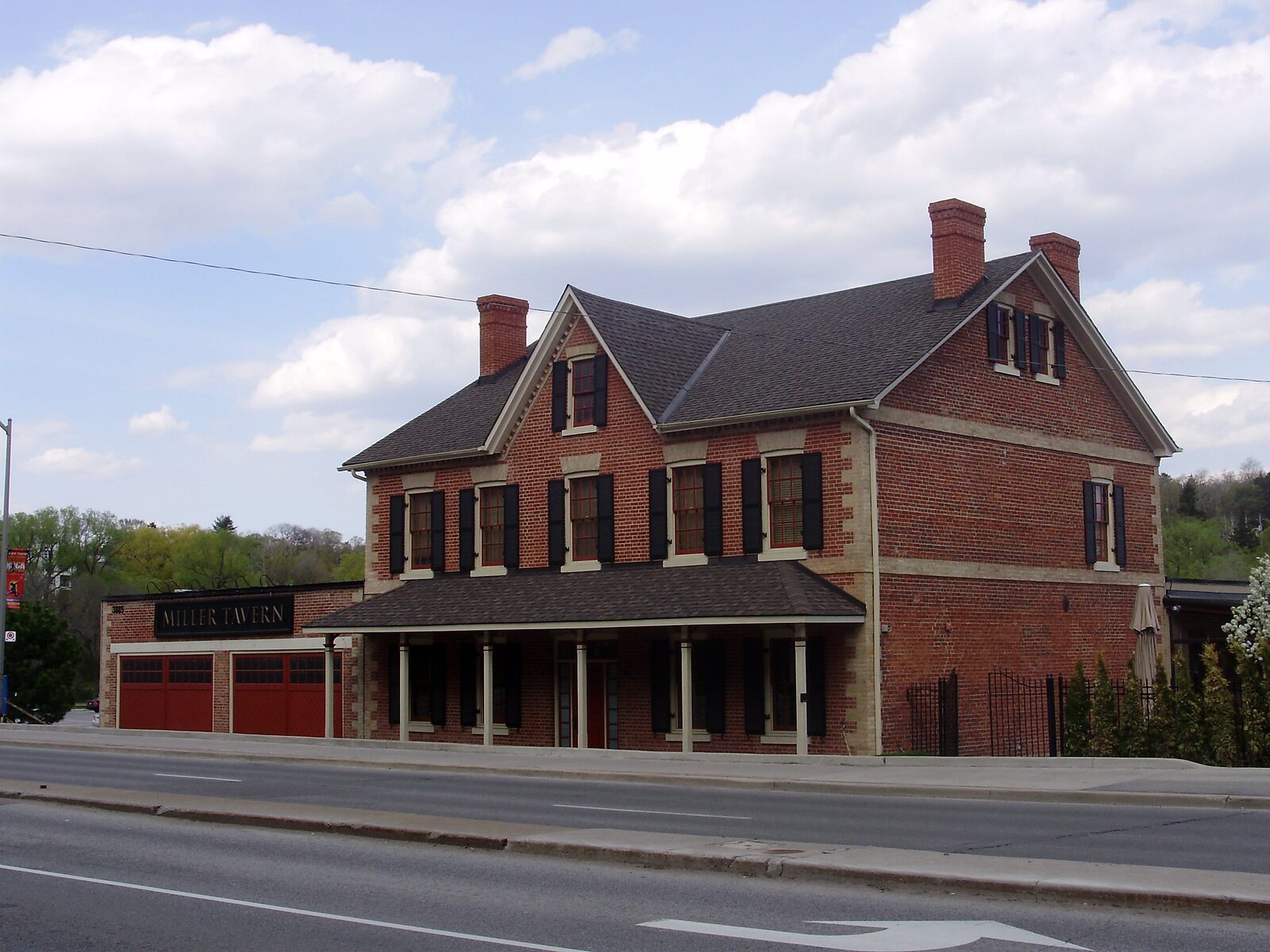
Cornelius van Nostrand settled here to farm in 1805. In 1824 a Scottish settler named James Hogg arrived and ran a whisky distillery and a grist mill in the valley, and the area still carries his family's name. In 1856 his sons John and William split the estate into 141 lots, but the land was boggy, with patches of quicksand, so few houses went up at first. The Jolly Miller Tavern, built around 1857 at the bottom of the Yonge Street hill, still stands today as the Miller Tavern. St. John's York Mills Anglican Church, started as a log church in 1816 and rebuilt in brick in 1844, is the oldest church in North York.
The neighbourhood you see today began in the 1920s, when lots, roads and homes were laid out in an English countryside style, and it was largely built out by the 1960s. In October 1954 Hurricane Hazel flooded the valley. In March 1960 five young Italian immigrant workers died building a water main tunnel here, and the public outcry helped bring in tougher workplace safety laws in Ontario. York Mills subway station opened in 1973.
What the homes are like
Detached homes: almost everything that trades here. Many sit on hilly, treed lots that back onto the valley.
Original homes: 1920s and 30s estate-style houses in English styles, plus a number of mid-century modern homes.
New custom homes: a big share of the market. Many older houses are being torn down and replaced with large new homes.
Condos: limited. Most of the condo choice is along Yonge Street and in the wider York Mills area.
What homes cost
Hoggs Hollow is part of TRREB district C12, which also covers The Bridle Path, York Mills, Sunnybrook and the St. Andrew-Windfields area. In September 2026:
Detached benchmark price: $3,061,400, down 4.9% from a year earlier
Composite benchmark (all home types): $2,267,400, down 4.8%
Detached homes sold: 10, at an average of $3,835,800 and a median of $3,835,000
Days on market: 36 on average, 50 for detached homes
Sale-to-list ratio: 96% overall, 95% for detached homes
Months of inventory: 9.0
These are district figures. In Hoggs Hollow, value swings a lot with the lot, the slope, how close you are to the valley and whether the house is original or new. With only a handful of detached sales in the district each month, a single big sale can move the averages. For a real number on a specific home, ask me for a free evaluation.
Schools
Catchments are set by address and Hoggs Hollow is split between schools, so always confirm with the school board before you buy.
Owen Public School (JK to 5), with English and French Immersion, for the eastern part of the area
St. Andrew's Middle School (Grades 6 to 8), for students coming from Owen
Armour Heights Public School (JK to 8) on Wilson Avenue, for some streets closer to Yonge
York Mills Collegiate Institute (Grades 9 to 12), with English and French Immersion
Catholic: Loretto Abbey Catholic Secondary School (girls, Grades 9 to 12) on Mason Boulevard, just west of Yonge
Getting around
Subway: York Mills station on Line 1 is at Yonge and York Mills, at the edge of the neighbourhood.
Line 5 Eglinton: open since February 2026. Transfer at Eglinton station, two stops south.
GO buses: regional GO buses leave from the York Mills bus terminal.
Driving: Highway 401 runs right past the valley, about as close as it gets in North Toronto.
The hills are steep and the streets inside the valley are quiet, so most families still keep a car, but the subway is a real option for the commute.
Things to do
The Miller Tavern at the bottom of the Yonge Street hill, in the historic Jolly Miller building.
St. John's York Mills Anglican Church and its hillside cemetery, one of the oldest church sites in the city.
Don River valley trails and green space running through the hollow.
Yonge and York Mills: restaurants, cafés and everyday shopping, with more at Yonge and Lawrence a stop south.
The Toronto Cricket, Skating and Curling Club on Wilson Avenue, a short drive west.
The honest take
The land is tricky. Hills, ravines and an old floodplain mean you need to look closely at drainage, slope and any conservation limits on what you can build.
Construction is constant. With so many teardowns and new builds, expect work on your street at some point.
Highway noise. Homes closest to Highway 401 and Yonge Street hear the traffic. A few streets in, it is very quiet.
It is expensive and the market is thin. Few homes sell in a given month, so pricing takes real local work.
Buying or selling in Hoggs Hollow
If you are buying: walk the lot, not just the house. Check the grading, drainage and any ravine or conservation rules, and get a full inspection before you firm up. Confirm the school catchment for the exact address, because the area is split.
If you are selling: lead with what makes the hollow special: the setting, the trees, the history and the walk to York Mills station. Price carefully against the few true comparables. In September 2026 detached homes in C12 sold at about 95% of asking and took 50 days on average.
Common questions
What do homes cost in Hoggs Hollow? In September 2026 the detached benchmark price in TRREB district C12, which includes Hoggs Hollow, was $3,061,400, and detached homes sold for an average of $3,835,800. Individual homes vary widely with the lot and the house.
Why is it called Hoggs Hollow? It is named after the Hogg family. James Hogg ran a distillery and grist mill in the valley from the 1820s.
Which high school serves Hoggs Hollow? Most of the area is zoned for York Mills Collegiate Institute, but it depends on the address. Check with the TDSB school locator.
Is Hoggs Hollow close to the subway? Yes. York Mills station on Line 1 sits at Yonge and York Mills, and Line 5 Eglinton is a transfer two stops south.
How long do homes take to sell in Hoggs Hollow? In September 2026 detached homes in district C12 sold in 50 days on average, and all home types in 36 days.
Thinking about Hoggs Hollow?
Whether you are buying in the valley or getting ready to sell, I will give you a straight, street-level read on the market. Call or text me at (416) 709-0988, or request a free home evaluation. Live listings in Hoggs Hollow are below.
Market figures: TRREB Market Watch, September 2026, district C12. School information from the TDSB, TCDSB and school websites as of September 2026; confirm your address with the board.
About the author
Antony Malfara, B.Comm., Broker, Co-Team Lead, Property Boys, Royal LePage Signature Realty, Brokerage. Over 10 years in Toronto real estate, 500+ transactions and more than $350 million in sales, focused on Midtown and North Toronto. RECO registration 4786256. CLHMS, MCNE. Speaks English, Italian and French. More about Antony. Last updated: October 2026.
More questions about Hoggs Hollow
Hoggs Hollow is a wooded valley at Yonge Street and York Mills Road, just south of York Mills Road. The west branch of the Don River runs through it, and its streets wind down into the valley and back up the hills. It feels like countryside, yet York Mills subway station and Highway 401 are minutes away.
Hoggs Hollow is named after the Hogg family. Scottish settler James Hogg arrived in 1824 and ran a whisky distillery and a grist mill in the valley. In 1856 his sons John and William split the estate into 141 lots, but the boggy land meant few houses went up at first. The neighbourhood seen today began in the 1920s.
Almost everything that sells in Hoggs Hollow is a detached home, many on hilly, treed lots that back onto the valley. Original homes include 1920s and 30s estate-style houses in English styles plus some mid-century modern homes. New custom homes are a big share of the market as older houses are replaced, and condos are limited, mostly along Yonge Street.
Hoggs Hollow is split between schools. Owen Public School serves the eastern part, with St. Andrew's Middle School for Grades 6 to 8, while Armour Heights Public School serves some streets closer to Yonge. Most of the area is zoned for York Mills Collegiate Institute, and Loretto Abbey is a Catholic girls' secondary school nearby. Catchments are set by address, so confirm with the school board.
The main downsides of Hoggs Hollow are tricky land, construction, highway noise and price. Hills, ravines and an old floodplain mean buyers must check drainage, slope and conservation limits. Teardowns and new builds bring regular construction, and homes closest to Highway 401 and Yonge Street hear traffic. Few homes sell each month, so pricing takes careful local work.
Compare and run the numbers
Compare: All neighbourhood guides
Run the numbers: Which neighbourhood fits you? · What can I afford? Budget Map · Toronto sell rate map · Cost to own calculator · Land transfer tax calculator · Seller net proceeds calculator